Welcome to the Mathematical World!
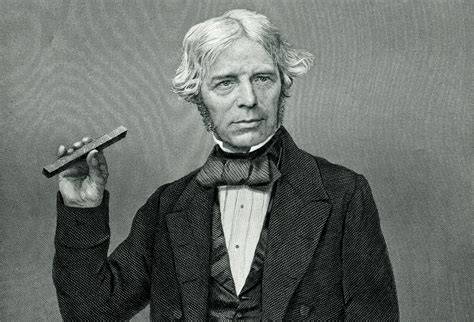
Michael Faraday
Pioneering Experimental Physicist and Chemist
Michael Faraday (1791–1867) was a British scientist whose experiments and discoveries laid the groundwork for modern electromagnetism and electrochemistry. Born in Newington Butts, England, Faraday came from a humble background and had minimal formal education. Through curiosity, determination, and apprenticeship with a bookbinder, he gained access to scientific literature and eventually secured a position as a laboratory assistant to Sir Humphry Davy at the Royal Institution.
Contributions to Electromagnetism
Faraday’s most celebrated work involved the study of electricity and magnetism. He discovered electromagnetic induction, demonstrating that a changing magnetic field could induce an electric current in a conductor. This principle is now mathematically expressed as:
\[ \nabla \times \mathbf{E} = -\frac{\partial \mathbf{B}}{\partial t} \]This fundamental law, known as Faraday’s law of induction, became a cornerstone of classical electromagnetism and was later incorporated into James Clerk Maxwell’s equations.
Electrochemistry
Faraday also made pioneering contributions to electrochemistry. He formulated the laws of electrolysis, quantifying the relationship between the amount of electric charge passed through a substance and the amount of chemical change produced. These can be expressed as:
\[ m = \frac{Q \cdot M}{n \cdot F} \]where \( m \) is the mass of the substance deposited, \( Q \) is the total electric charge, \( M \) is the molar mass, \( n \) is the number of electrons involved in the reaction, and \( F \) is Faraday’s constant.
Magnetism and the Faraday Cage
Faraday discovered that magnetic fields could influence materials and also invented the Faraday cage — a device that shields sensitive equipment from external electric fields. He showed that charges reside only on the external surface of conductors, an insight that is fundamental in electromagnetism.
Other Contributions and Legacy
Faraday’s work extended beyond physics and chemistry. He introduced concepts such as lines of force, which helped visualize electromagnetic fields, and he worked on diamagnetism and electrostatic phenomena. Despite having little formal education, he was a brilliant experimentalist and an excellent communicator, inspiring generations of scientists. His discoveries form the practical basis for electric motors, transformers, and generators, making him one of the most influential figures in science history.

All rights reserved by the Mathematical Unity
Contact: +8801400044645
Email: mathematicalhorse1453@gmail.com
Our Discord Server: Mathematical Unity [Ulus Riyadiyat]